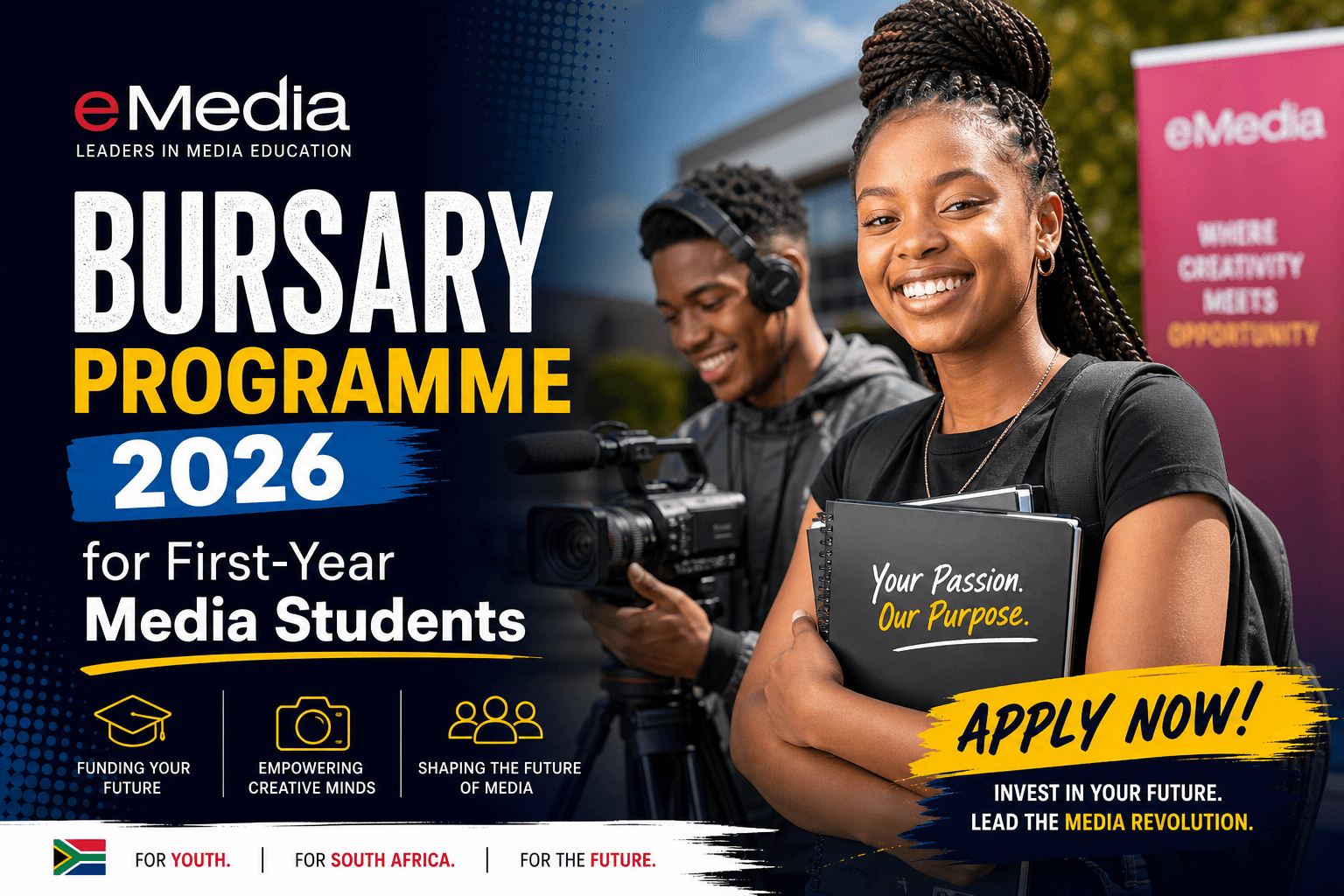

The eMedia Bursary Programme 2026 matters right now because many first-year students in South Africa are starting strong, but struggling to pay for university. If you are studying media, broadcasting, radio, or television, this support could help you stay in class and keep moving toward your career.
Many students feel this pressure early in the year. You may have the talent, the marks, and the drive, but fees can still stand in the way. That is why bursaries like this are important. They give you a chance to focus on your studies instead of worrying about tuition every day.
The eMedia Bursary Programme 2026 is a focused bursary for first-year students who are already registered at a South African university and are studying in a media-related field. It is meant to support future professionals in broadcasting and content creation.
This is not a general bursary for every course. It is aimed at students who want to build a career in television, radio, broadcasting, or similar media studies. If that is your path, this opportunity may fit you well.
What the eMedia Bursary Programme 2026 is
The eMedia Bursary Programme 2026 helps first-year students with tuition fees for the 2026 academic year. It is based in Gauteng, but applicants must be studying at a South African university.
The bursary is designed for students who have already started their studies and need financial help to continue. It supports learning in a field where practical skills, communication, and creativity matter a lot.
eMedia is looking for students who are serious about the industry and who need support to keep studying. It is a small opportunity, with only one position available, so competition is likely to be strong.
Who can apply
To qualify for the eMedia Bursary Programme 2026, you must meet all the requirements below.
- You must be a first-year student at a South African university.
- You must be studying a media-related qualification.
- Your field must be related to television, radio, broadcasting, or a similar area.
- You must have achieved at least 65% in your National Senior Certificate (NSC).
- You must not be receiving any other financial assistance.
- You must not be funded by NSFAS.
The financial rule is very important. This bursary is for students who have no other support. If you already get NSFAS or another bursary, you should not apply.
Many applicants struggle with this part because they hope to “double fund” their studies. That is not allowed here. The bursary is meant to reach students who would otherwise have no funding at all.
Quick facts about the bursary
- Closing Date: Not specified
- Location: Gauteng
- Applicants must be studying in: South Africa
- Duration: 2026 academic year
- Positions Available: 1
- Reference Number: etv241
- Stipend: Not applicable
What you gain from this bursary
The biggest benefit is tuition support. That means the bursary helps pay your study fees, which can be one of the hardest costs for many families to manage.
This bursary does not cover accommodation, textbooks, or living expenses. So you still need a plan for those costs. But if tuition is your biggest problem, this support can make a real difference.
For a student trying to stay in school, that can mean a lot. It can reduce pressure on your family and help you stay focused on your coursework.
There is also another benefit that many students do not always think about. Being supported by an industry-related company can help you understand the standards of the field you want to enter. It shows that you are already being linked to the media world while you study.
Documents you must prepare
Many applicants lose out because they submit incomplete documents. If you want to apply, prepare everything before you start.
- Certified copy of your South African ID, not older than 3 months
- Your academic results or NSC certificate
- Proof of university registration for 2026
- Your latest university fee statement
- Proof of household income, such as payslips, affidavits, or bank statements
Check that every document is clear and easy to read. Blurry scans and missing pages can hurt your chances. If a document is certified, make sure the certification is still valid and up to date.
In South Africa, many good applicants are rejected simply because they rush the paperwork. Do not let that happen to you.
How to apply
You must apply through the official eMedia application platform. Use only the official link and do not send your documents to any other site or person.
- Go to the official application page.
- Read the bursary details carefully.
- Prepare all required documents before applying.
- Make sure each document is certified and clearly scanned.
- Complete the online form with correct personal and study information.
- Upload all documents in the correct format.
- Submit your application before the closing date, if one is announced.
Applications for the eMedia Bursary Programme 2026 must be submitted on the official eMedia recruitment or bursary platform.
APPLY HERE: https://jobs.mcidirecthire.com/Jobs/Review?C=etv&J=527
Incomplete applications will be declined. If any document is missing, your application may not be considered.
Tips to improve your chances
There is no guarantee of success, especially because only one place is available. But you can improve your chances by applying carefully and early.
- Read every requirement before you apply.
- Only apply if you meet all the criteria.
- Make sure your NSC result meets the 65% minimum.
- Check that your university registration letter is for 2026.
- Use clear, certified copies of every document.
- Show that your documents are complete and neatly organised.
- Do not leave the application to the last minute.
If you are unsure about any requirement, check the official details again before submitting. Careful applications usually stand out more than rushed ones.
It also helps to be honest about your financial situation. If you do not have other funding, make that clear in your supporting documents. Bursary committees look for students who truly need help.
Why this bursary is important for South African students
Media is changing fast in South Africa. Radio, television, and digital platforms all need trained people who can tell stories well and work professionally.
But training costs money. For many students, fees are the first big barrier. That is why bursaries like this matter. They help students stay on track when family budgets are under pressure.
For a first-year student, this support can be especially valuable. The first year is often the hardest. You are adjusting to new classes, new costs, and a new environment. Financial help can make that transition easier.
The eMedia bursary is also industry-specific, which is useful if you already know where you want to go. It supports students who are building skills for a real career in broadcasting and media.
Frequently asked questions
Can I apply if I already have NSFAS funding?
No. This bursary is only for students who are not receiving any other financial assistance.
Does the bursary cover accommodation?
No. It covers tuition fees only.
Who should apply for this bursary?
First-year students studying media-related qualifications, especially those in television, radio, broadcasting, or similar fields.
How many bursaries are available?
There is only one position available, so the competition may be high.
Final thoughts
If you are studying media and you need help with tuition, the eMedia Bursary Programme 2026 is worth serious attention. It is focused, limited, and competitive, but it could help the right student continue their studies.
Take your time, prepare your documents properly, and apply only through the official platform. Small errors can cost you a chance.
If this opportunity fits your course and your financial situation, do not delay. Apply with care, keep your documents in order, and give yourself the best possible chance.