
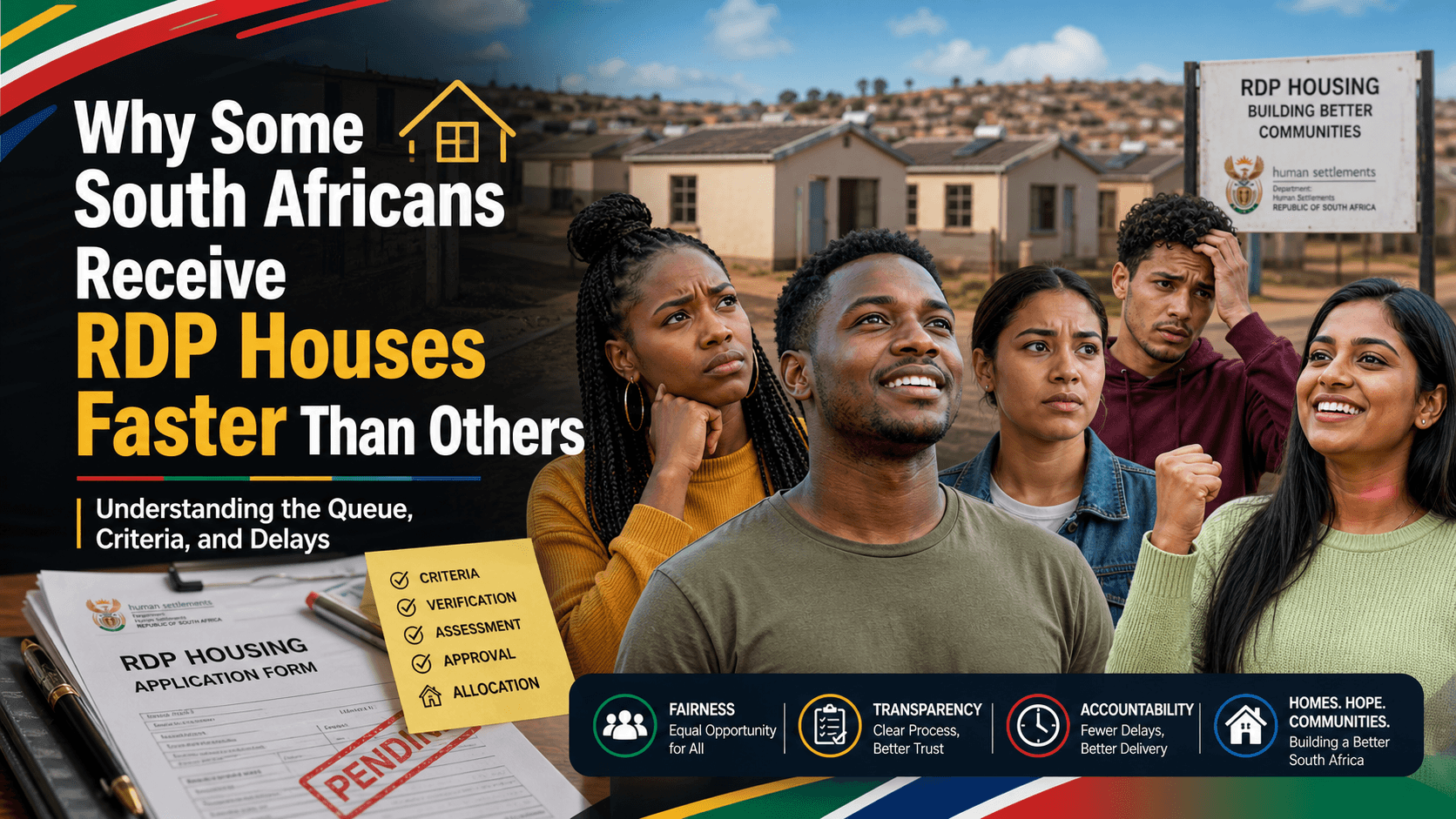

If you are waiting for an RDP house, you need to understand why some people receive their keys faster than others. Knowing how the system works can save you years of frustration and protect you from scams. While you work toward securing your home, you can also explore training options through Student Office to build new skills for your future.
What Is an RDP House?
An RDP house is a home paid for by the government to help low-income families. The Department of Human Settlements builds these houses and gives them to people who qualify through a subsidy programme.
You do not pay to buy the house. The government covers the cost. This helps families who cannot afford to buy homes on the open market. These houses are also called subsidised housing.
Who Can Apply?
You must meet strict rules to qualify. These rules ensure the houses go to people who truly need them.
- You must be a South African citizen or permanent resident.
- You must be legally old enough to sign contracts.
- You must never have received a government housing subsidy before.
- You must not already own a house.
Certain vulnerable groups sometimes receive priority. These include older people, people with disabilities, single parents, and households facing special hardship. This does not guarantee immediate housing, but it may help you move faster when projects become available in your area.
What You Gain
Receiving an RDP house gives you permanent ownership. You can live in the home for life and pass it to your children.
You gain security and stability. You no longer need to pay rent or worry about eviction from informal housing. This allows you to plan for your family’s future with confidence.
How to Apply
You cannot apply online in most areas. You must visit a government office in person.
- Go to your local municipal housing office or provincial human settlements department.
- Fill out the registration form with your correct personal details.
- Submit your South African ID and other required papers.
- Make sure your name enters the municipal housing demand database or the National Housing Needs Register.
- Ask for proof that you registered, such as a reference number.
Tips to Receive Your House Faster
You can take specific steps to avoid delays and improve your position on the waiting list.
Update Your Details Immediately
The housing database is one of the most important parts of the process. Officials use it to find you when houses become available.
If you change your phone number, move to a new address, or your income changes, go back to the housing office immediately. Update your information. If officials cannot reach you for verification, they may skip you and give the house to someone else they can contact.
Keep Your Documents Ready
Do not wait for officials to call you. Prepare these papers now and keep them safe:
- Your South African ID book or card.
- Proof of income if you are working.
- Birth certificates for your children.
- Marriage or divorce papers if applicable.
- Proof of where you currently live.
- Medical certificates or documents proving disability if relevant.
When verification happens, submit these quickly. People with complete files move faster than those with missing documents.
Understand Why Location Matters
Houses are built in specific wards, townships, and settlements. If a project completes in your area, you may receive a house before someone who applied earlier but lives where no construction is happening yet.
This is why some people seem to “jump the queue.” They are simply linked to a project that became ready in their specific location.
Avoid Scams and Corruption
Never pay money to councillors, officials, or anyone who promises to speed up your application. Councillors do not decide who gets houses. Only housing department officials handle allocation.
Paying for an RDP house is illegal. You will lose your money and you will not receive a house. Report anyone who asks for payment. Real housing opportunities come only through official municipal or provincial channels.
Check Your Status Regularly
Do not wait silently for years. Visit your housing office every few months to check if your application is still active. Ask if your details need updating. Confirm which projects are planned for your area.
If you registered many years ago, ask specifically whether your name is still on the database and if you need to re-verify your information.
Your Next Steps
Visit your local municipal housing office this month. Update your contact details and confirm your documents are complete.
Stay patient but stay active. The waiting list is long because housing demand is very high. However, applicants with correct details and complete files move through verification faster.
Your house will come. Keep your information current, avoid anyone asking for payment, and wait for the official call from the municipality.