
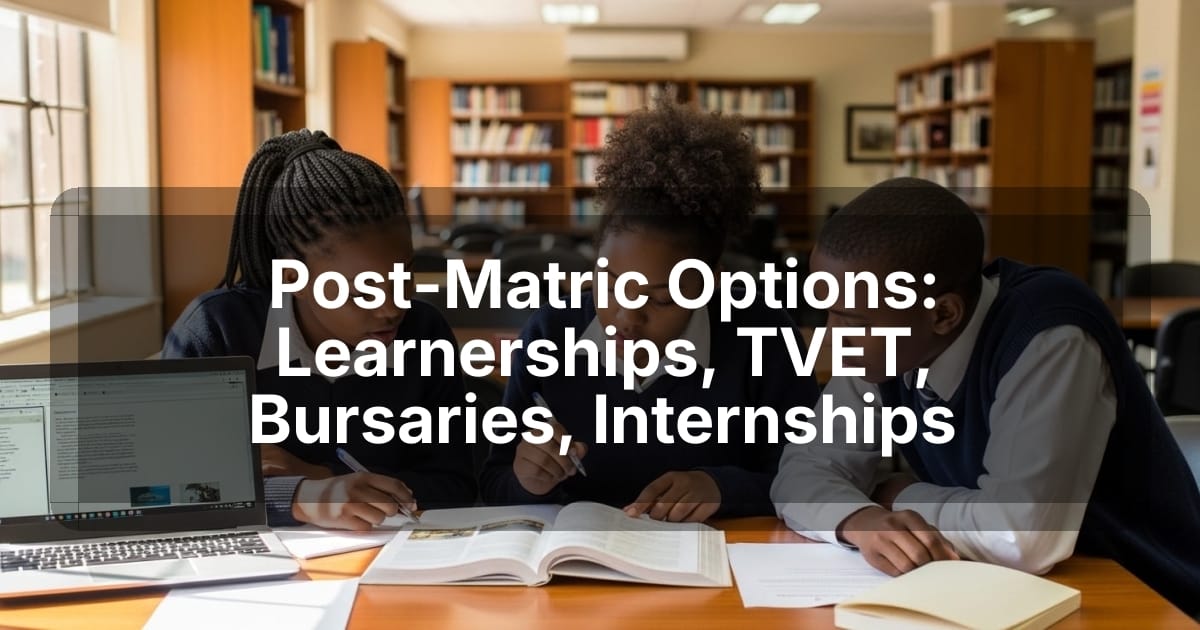

You’ve just finished matric and the pressure to decide what comes next is high. Acting now can keep you ahead of the competition and open doors to learnerships, TVET colleges, bursaries, internships, or entry‑level jobs. For reliable information, visit the Student Office website.
What you can do after matric
South Africa offers many routes after school. You can enrol in a TVET college, apply for a learnership, look for a bursary, start an internship, or take a short‑term skills course. All of these options give you practical experience and a pathway to a career.
Who can apply
These opportunities are open to anyone who has:
- Successfully completed Grade 12 (matric).
- Meets any specific age or grade requirements set by the programme.
- Has the basic computer and communication skills that most employers expect.
Some learnerships and bursaries may require you to be South African citizens or permanent residents.
What you gain
Each option brings useful benefits:
- Learnerships – combine classroom learning with on‑the‑job training, and often lead to full‑time contracts.
- TVET colleges – provide practical qualifications in fields such as engineering, business, hospitality, ICT and more.
- Bursaries – cover tuition, textbooks and sometimes living expenses, allowing you to study without financial stress.
- Internships and entry‑level work – give you real‑world experience, references and a professional network.
- Skills courses – improve your CV with targeted abilities like Excel, coding, graphic design or bookkeeping.
How to apply – step by step
- Identify the path that matches your interest (e.g., IT, engineering, hospitality).
- Visit the official website of the relevant SETA, TVET college, or bursary provider.
- Check the admission criteria, required documents and closing dates.
- Create a simple CV that lists your education, skills, volunteer work and any projects.
- Gather your matric certificate, ID copy, proof of residence and any transcripts.
- Complete the online application form and upload the documents.
- Send a professional email confirming your submission and keep a copy of everything.
For bursary funding, start at the NSFAS portal and create a myNSFAS profile to apply for government assistance.
Tips to improve your chances
- Target programmes that align with the career you eventually want.
- Read the eligibility requirements carefully – never assume you are ineligible.
- Use the organisation’s official website to verify any offer before you share personal details.
- Tailor your CV and cover letter to each opportunity; highlight relevant school projects or community work.
- Keep a tracking sheet with the name of the programme, application date, and follow‑up actions.
- Watch out for scams – genuine postings will use the organisation’s domain email address.
- If you are unsure which direction suits you, book a free session with a career adviser or a teacher.
Next steps – a simple 30‑day plan
Use the month after matric to build momentum:
- Week 1: List three industries that interest you.
- Week 2: Research the entry requirements and typical salaries for each.
- Week 3: Update your CV, write a short cover letter and collect your certificates.
- Week 4: Submit at least two well‑matched applications and start a free online skill course.
Record every application in a spreadsheet; note the closing date and any response you receive.
Final thoughts
Not having a placement right after matric is common and does not mean you are falling behind. Your next step could be a TVET qualification, a learnership, a bursary, an internship, or simply a new skill that makes you more employable. Choose a path that fits your interests, verify information on official sites, and keep building your abilities while you apply. With a clear plan and realistic expectations, you are already moving toward a successful career.