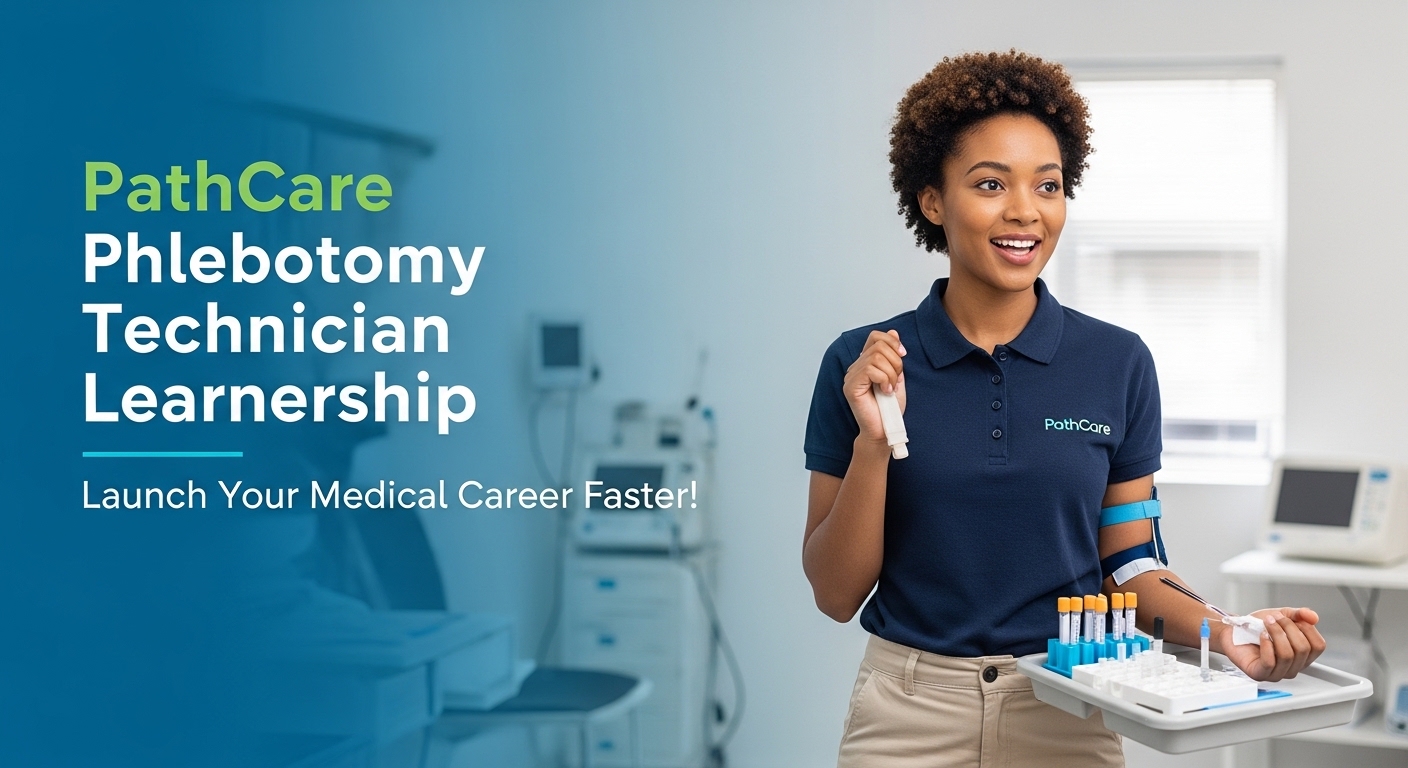

If you want to work in healthcare but don’t see yourself as a nurse or doctor, the PathCare Phlebotomy Technician Learnership could be your way in.
I’ve helped many young people apply for learnerships like this. Some had just finished school. Others were stuck in jobs with no growth. The ones who did well had one thing in common: they understood what the role really involves before applying.
Let’s break it down in plain terms so you can decide if this path fits you.
What Is the PathCare Phlebotomy Technician Learnership?
PathCare is a private pathology laboratory group in South Africa. They test blood and other samples to help doctors diagnose patients.
A phlebotomy technician is the person who:
- Draws blood from patients
- Labels and handles samples
- Makes sure specimens reach the lab safely
- Calms nervous patients
- Follows strict hygiene and safety rules
The learnership is a structured training program. You study theory and work in real clinics or labs at the same time. At the end, you receive a qualification registered on the National Qualifications Framework (NQF).
It’s not just a short course. It’s proper workplace training.
Why This Learnership Matters
Healthcare is one of the few fields that keeps growing. People always need medical tests.
Phlebotomy is often a stepping stone into:
- Medical laboratory technology
- Nursing
- Healthcare administration
- Specialized lab work
I’ve seen learners start as phlebotomists and later move into senior lab roles. It’s a solid entry point if you don’t have money for university right now.
What You Actually Do as a Phlebotomy Technician
Some people think the job is “just drawing blood.” It’s more than that.
Here’s what a normal day might look like:
- Check your equipment and supplies
- Call patients from the waiting area
- Confirm their details carefully
- Explain the procedure
- Draw blood using sterile tools
- Label tubes correctly
- Enter patient details into the system
- Send samples to the lab
- Clean and prepare for the next patient
You also deal with:
- Scared children
- Fainting adults
- Busy clinics
- Strict time pressure
If you’re scared of needles yourself, this might not be for you. I’ve seen applicants freeze during practical assessments because they weren’t honest about that.
Minimum Requirements to Apply
These can change slightly each year, but usually you need:
- Grade 12 (Matric)
- English (read, write, understand well)
- Mathematics or Mathematical Literacy
- Life Sciences is helpful
- South African ID
Some programs prefer:
- Good marks in Maths and Science
- Basic computer skills
- Strong communication skills
Always check PathCare’s official website for the latest details. Don’t rely on social media posts alone.
How Long Is the Learnership?
Most phlebotomy learnerships run for about 12 to 24 months.
During this time:
- You attend classroom-based training
- You complete workplace practical hours
- You are assessed regularly
You don’t just sit in class. You work in real healthcare settings.
Do You Get Paid?
Yes, usually learners receive a monthly stipend.
It’s not a full salary. Think of it as support money to cover:
- Transport
- Meals
- Basic expenses
The amount can change each year.
Important: A stipend is not guaranteed permanent employment after completion. You still need to perform well and apply for open positions.
What Makes a Strong Candidate?
From what I’ve seen helping applicants, PathCare looks for people who are:
- Calm under pressure
- Neat and organized
- Good with people
- Careful with details
- Responsible
Marks matter. But attitude matters more.
I once advised a learner with average Maths marks but strong people skills and hospital volunteer experience. She got in. Another applicant had high marks but poor communication skills and struggled in the interview.
This job is about trust. You handle people’s blood samples. Mistakes are serious.
Step-by-Step: How to Apply
Here’s a simple guide.
1. Check the Official Website
Go to the PathCare careers page. Look for:
- Learnership listings
- Phlebotomy trainee posts
Never pay anyone to “secure” a spot for you. That’s a red flag.
2. Prepare Your Documents
You’ll usually need:
- Updated CV
- Certified copy of ID
- Certified copy of Matric certificate
- Academic transcript
- Proof of residence
Keep everything scanned and saved as PDFs.
3. Write a Clear CV
Keep it simple:
Personal details
- Education
- Any healthcare experience
- Volunteer work
- Skills (communication, teamwork, computer literacy)
No long paragraphs. Just clear bullet points.
4. Apply Before the Deadline
Late applications are often ignored.
5. Prepare for Assessments
If shortlisted, you may go through:
- Aptitude tests
- Interviews
- Practical demonstrations
Practice basic interview questions like:
- Why do you want to work in healthcare?
- How do you handle stress?
- How would you calm a nervous patient?
What They Test You On
Expect questions or tests around:
- Basic Maths (calculations, measurements)
- English comprehension
- Attention to detail
- Following instructions
Phlebotomy requires accuracy. One mislabeled tube can cause serious problems.
Common Mistakes That Cost Applicants
I’ve seen these many times:
- Applying without reading requirements
- Submitting blurry documents
- Using copied CV templates with wrong company names
- Not preparing for interviews
- Arriving late
Another big mistake? Not understanding what the job involves. Some learners drop out after seeing blood daily.
Pros and Cons of the PathCare Phlebotomy Learnership
Let’s be honest.
Pros
- Earn while you learn
- Real healthcare experience
- Recognized qualification
- Good entry into medical field
- High demand for lab services
Cons
- Physically tiring
- Emotional pressure
- Not very high starting salary
- Standing for long hours
- Dealing with difficult patients
You need thick skin and steady hands.
Is This Learnership Right for You?
Ask yourself:
- Am I comfortable around blood?
- Can I stay calm when someone faints?
- Do I enjoy helping sick people?
- Can I follow strict rules every day?
- Am I okay starting small and growing slowly?
If you answered yes to most of these, this could work for you.
Career Growth After Completing It
Once qualified, you can work as a:
- Phlebotomy Technician
- Laboratory Assistant
- Clinic-based phlebotomist
With further study, you can move into:
- Medical Laboratory Technology
- Nursing
- Healthcare management
I’ve seen learners use this qualification to fund further studies. They worked part-time and studied at the same time.
What’s Changed Recently in Phlebotomy Training?
Healthcare is becoming more digital.
You’ll now likely use:
- Electronic patient systems
- Barcode labeling
- Digital tracking of samples
Accuracy and computer literacy are more important than ever.
Infection control has also become stricter since COVID-19. Expect heavy focus on:
- PPE use
- Hand hygiene
- Waste disposal
How to Stand Out From Other Applicants
Here are smart moves:
- Volunteer at a clinic or hospital
- Take a short first aid course
- Improve your computer skills
- Practice communication skills
- Keep your social media professional
Even helping at a community health drive shows initiative.
How to Measure Your Progress During the Learnership
You’re doing well if:
- You complete logbooks on time
- Supervisors give positive feedback
- You improve your speed without making errors
- Patients feel comfortable with you
Ask for feedback often. Don’t wait until final assessments.
Spotting Scams
Healthcare learnership scams are common.
Watch out for:
- Requests for payment
- WhatsApp-only communication
- No official email domain
- No company website reference
PathCare does not charge application fees.
What If You Don’t Get Accepted?
Don’t stop.
You can:
- Apply again next intake
- Apply to other pathology labs
- Take a related healthcare course
- Work as a clinic receptionist to gain exposure
Rejection doesn’t mean you’re not capable. Sometimes spots are just limited.
Daily Life as a Phlebotomy Learner
Expect:
- Early mornings
- Busy waiting rooms
- Constant interaction with patients
- Strict supervision
- Regular testing and assessments
It’s hands-on from early on. That’s what makes it powerful training.
A Real Example
One young man I guided had no money for university. He applied twice before getting accepted. During the learnership, he struggled with confidence. Patients could sense his nervousness.
He practiced explaining procedures in front of a mirror every day. Within months, he became one of the most requested learners at his clinic.
Today, he works full-time in a private lab.
Skill grows with practice.
Tools You’ll Use
- Needles and vacutainer systems
- Tourniquets
- Alcohol swabs
- Gloves and PPE
- Barcode scanners
- Sample tubes
You are trained step by step. No one expects perfection on day one.
Simple Action Plan If You’re Interested
- Check PathCare’s official site weekly.
- Prepare your CV now, not later.
- Improve your Maths and English basics.
- Practice interview answers.
- Volunteer if possible.
Start before the application window opens.
Where to Look for Updates
- PathCare official website
- Their official social media pages
- Trusted job portals
- School career offices
Avoid random Facebook posts promising guaranteed placement.
The Bigger Picture
Healthcare careers don’t always start with big titles. Many begin with practical roles like this.
The PathCare Phlebotomy Technician Learnership gives you:
- Work experience
- A qualification
- A foot in the healthcare system
If you’re serious, prepared, and willing to work hard, it can change your direction completely.
And from what I’ve seen over the years, those who treat it as a real career path — not just a quick stipend — are the ones who go far.