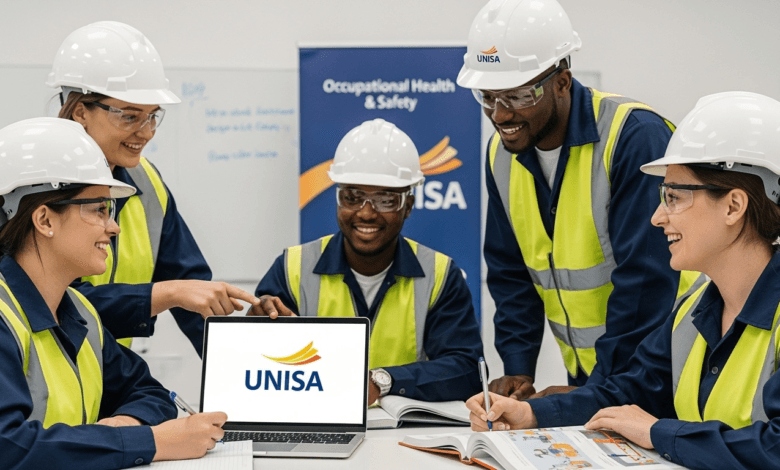
Are you thinking about a career where you help keep people safe at work? Maybe you’ve heard about occupational health and safety but aren’t sure where to start. If you’re looking at studying in South Africa, UNISA (University of South Africa) has some great options for you.
Let’s break down everything about occupational health and safety courses at UNISA so you can decide if this path is right for you.
What Is Occupational Health And Safety?
Before we jump into the courses, let’s talk about what this field actually means.
Occupational health and safety (OHS) is all about making sure people don’t get hurt or sick because of their jobs. Think about it – every workplace has risks. A construction site has heavy machinery. An office has computers that can cause eye strain. A factory has chemicals. Someone needs to identify these dangers and figure out how to protect workers.
That’s where OHS professionals come in. They:
- Check workplaces for hazards
- Create safety rules and procedures
- Train workers on how to stay safe
- Investigate accidents when they happen
- Make sure companies follow safety laws
It’s a job that actually makes a real difference in people’s lives.
Why Study Occupational Health And Safety At UNISA?
UNISA is Africa’s largest distance learning university. This means you can study from home, which is perfect if you’re working or can’t attend classes in person.
Here’s why UNISA stands out for OHS studies:
Flexible Learning
You don’t have to sit in a classroom. You study at your own pace, on your own time. This works well for people who have jobs or other responsibilities.
Affordable Fees
Compared to many other universities, UNISA’s fees are more budget-friendly. You can get a quality education without breaking the bank.
Recognized Qualifications
UNISA degrees and certificates are accepted by employers across South Africa and in many other countries too.
Support Systems
Even though you study from home, UNISA gives you access to tutors, online resources, and regional learning centers.
Occupational Health And Safety Courses At UNISA: Your Options
UNISA offers different levels of study in this field. Let’s look at what’s available.
Certificate Programs
If you’re just starting out or want a shorter course, UNISA has certificate options. These typically take one year to complete and give you basic knowledge of workplace safety.
Certificates are good if you:
- Want to test the waters before committing to a longer course
- Need a qualification quickly to get started in the field
- Already work in a related area and want to add safety skills
Diploma Programs
A diploma takes things further than a certificate. You’ll spend more time learning and come out with a stronger qualification.
At UNISA, diploma programs in health and safety related fields usually take about three years if you study full-time (or longer if you go part-time).
Degree Programs
For those who want the full package, UNISA offers degree programs that cover occupational health and safety topics.
Bachelor’s Degrees
A bachelor’s degree gives you a solid foundation. You’ll learn theory and practical skills that prepare you for various roles in the safety field.
Some relevant degree programs at UNISA include:
- Bachelor of Arts in Environmental Management (which covers workplace safety aspects)
- Bachelor of Science degrees with modules related to occupational health
Postgraduate Options
Already have a degree? UNISA also has postgraduate certificates and honors programs that let you specialize further in health and safety areas.
What Will You Learn In These Courses?
Occupational health and safety courses at UNISA cover a wide range of topics. Here’s a taste of what you might study:
Risk Assessment
You’ll learn how to look at a workplace and spot things that could hurt people. This includes physical dangers like machinery, chemical hazards, and even things like stress and fatigue.
Safety Laws and Regulations
South Africa has specific laws about workplace safety, like the Occupational Health and Safety Act. You’ll need to know these inside and out.
Accident Investigation
When something goes wrong at work, someone needs to figure out what happened and why. You’ll learn techniques for investigating incidents and preventing them from happening again.
Emergency Planning
What happens if there’s a fire? A chemical spill? A medical emergency? You’ll learn how to create plans that keep everyone safe during crisis situations.
Health Hazards
It’s not just about accidents. You’ll also study things that can make workers sick over time, like noise exposure, breathing in dust, or repetitive movements.
Safety Management Systems
Big companies need organized ways to handle safety. You’ll learn how to set up and manage these systems.
Communication and Training
Knowing about safety isn’t enough – you need to be able to teach others. These courses help you develop skills to train workers effectively.
Entry Requirements For UNISA OHS Courses
What do you need to get into these programs? Requirements vary depending on the course level.
For Certificate Programs
- National Senior Certificate (matric) or equivalent
- Some programs may accept mature students without matric if they have work experience
For Diploma Programs
- National Senior Certificate with specific subject requirements
- Some programs need you to have passed certain subjects like English and Mathematics
For Degree Programs
- National Senior Certificate with university admission
- Specific subjects may be required depending on the program
- Minimum points score on the Admission Point Score (APS) system
For Postgraduate Programs
- A relevant undergraduate degree
- Sometimes a certain average mark is required
- Work experience may be needed for some programs
Tip: Always check UNISA’s official website or contact them directly for the most current entry requirements. These can change from year to year.
How To Apply For Occupational Health And Safety Courses At UNISA
Ready to apply? Here’s the basic process:
Step 1: Research Your Options
Go to UNISA’s website and look at the different courses available. Read through the course descriptions, modules, and requirements carefully.
Step 2: Check Application Dates
UNISA has specific application periods. For most courses, applications open around August/September for the following year. Don’t miss these deadlines!
Step 3: Gather Your Documents
You’ll typically need:
- Certified copy of your ID
- Certified copies of your qualifications
- Proof of payment for the application fee
Step 4: Apply Online
UNISA uses an online application system. Create an account on myUnisa and follow the application steps.
Step 5: Pay the Application Fee
There’s a non-refundable fee to apply. Make sure you pay this on time.
Step 6: Wait For Your Response
UNISA will let you know if you’ve been accepted. This can take several weeks, so be patient.
Step 7: Register For Your Modules
Once accepted, you’ll need to register for the specific subjects you’ll study that semester.
Career Opportunities After Completing Your Course
So what can you actually do with an occupational health and safety qualification? Lots of things!
Safety Officer
This is the most common entry-level job. You’ll be responsible for checking that a workplace follows safety rules and helping to prevent accidents.
Health and Safety Manager
With more experience and higher qualifications, you can move into management. You’ll oversee safety programs for entire companies or departments.
Risk Assessor
Some professionals specialize in analyzing risks. You might work for insurance companies, consulting firms, or government agencies.
Safety Trainer
If you enjoy teaching, you could focus on training workers about safety procedures and practices.
Compliance Officer
These professionals make sure companies follow all the legal requirements for workplace safety.
Safety Consultant
Once you have experience, you could work for yourself. Consultants help different companies improve their safety programs.
Industries That Hire OHS Professionals
Almost every industry needs safety professionals. Some of the biggest employers include:
- Mining companies
- Construction firms
- Manufacturing plants
- Oil and gas companies
- Healthcare facilities
- Government departments
- Retail chains
- Transportation companies
Salary Expectations In South Africa
Let’s talk money. What can you expect to earn in this field?
Salaries vary based on your qualifications, experience, and where you work. Here’s a rough guide:
- Entry-level Safety Officer: R150,000 – R250,000 per year
- Experienced Safety Officer: R250,000 – R400,000 per year
- Safety Manager: R400,000 – R700,000 per year
- Senior Safety Manager/Director: R700,000+ per year
Industries like mining and oil typically pay higher salaries because the risks are greater.
Tips For Success In Your UNISA Studies
Distance learning isn’t easy. Here are some ways to help you succeed:
Create a Study Schedule
Without regular classes, it’s easy to fall behind. Set specific times each week for studying and stick to them.
Find a Study Space
Having a quiet place to work makes a big difference. Try to keep it separate from where you relax.
Use UNISA’s Resources
Take advantage of everything UNISA offers – online libraries, discussion forums, tutorial sessions, and more.
Connect With Other Students
Join study groups online or in person. Learning with others helps you stay motivated and understand difficult topics.
Don’t Wait Until the Last Minute
Assignments and exam prep take time. Start early so you’re not rushing at the end.
Ask For Help When Needed
If you’re struggling with something, reach out to tutors or lecturers. That’s what they’re there for.
Stay Organized
Keep track of deadlines, assignment due dates, and exam schedules. Use a calendar or planner to stay on top of everything.
Frequently Asked Questions
Can I work while studying at UNISA?
Yes! Many students work full-time or part-time while studying. That’s one of the main benefits of distance learning.
How long does it take to complete a degree?
A bachelor’s degree typically takes 3-4 years full-time. Part-time students may take longer.
Is online learning as good as attending a campus?
It’s different, not worse. You get the same qualification, and many employers don’t care whether you studied on campus or through distance learning.
Do I need experience to study these courses?
For most undergraduate courses, no. Some postgraduate programs may require work experience.
Are there practical components?
Some programs may require workplace-based learning or practical assignments. Check the specific course requirements.
Can I study occupational health and safety if I’m bad at science?
You’ll need basic scientific knowledge, but you don’t need to be a genius. If you can handle high school science, you should be fine.
Is This Career Right For You?
Occupational health and safety isn’t for everyone. It might be a good fit if you:
- Care about people’s wellbeing
- Pay attention to details
- Can communicate clearly with different types of people
- Like solving problems
- Are comfortable enforcing rules (even when people don’t like it)
- Can handle stressful situations calmly
On the other hand, it might not suit you if you:
- Hate paperwork (there’s a lot of it)
- Don’t like confrontation
- Get bored with routine tasks
- Aren’t good at following up on things
Final Thoughts
Occupational health and safety courses at UNISA offer a real path to a meaningful career. You’ll learn skills that protect people and help companies operate responsibly.
The flexibility of distance learning makes it possible to study even if you have a busy life. And with safety professionals needed across so many industries, job opportunities are solid.
If you’re ready to take the next step, head to UNISA’s website and start exploring your options. Your future in keeping workplaces safe could start today.
Ready to learn more? Visit www.unisa.ac.za to see the full list of available courses and current entry requirements.