
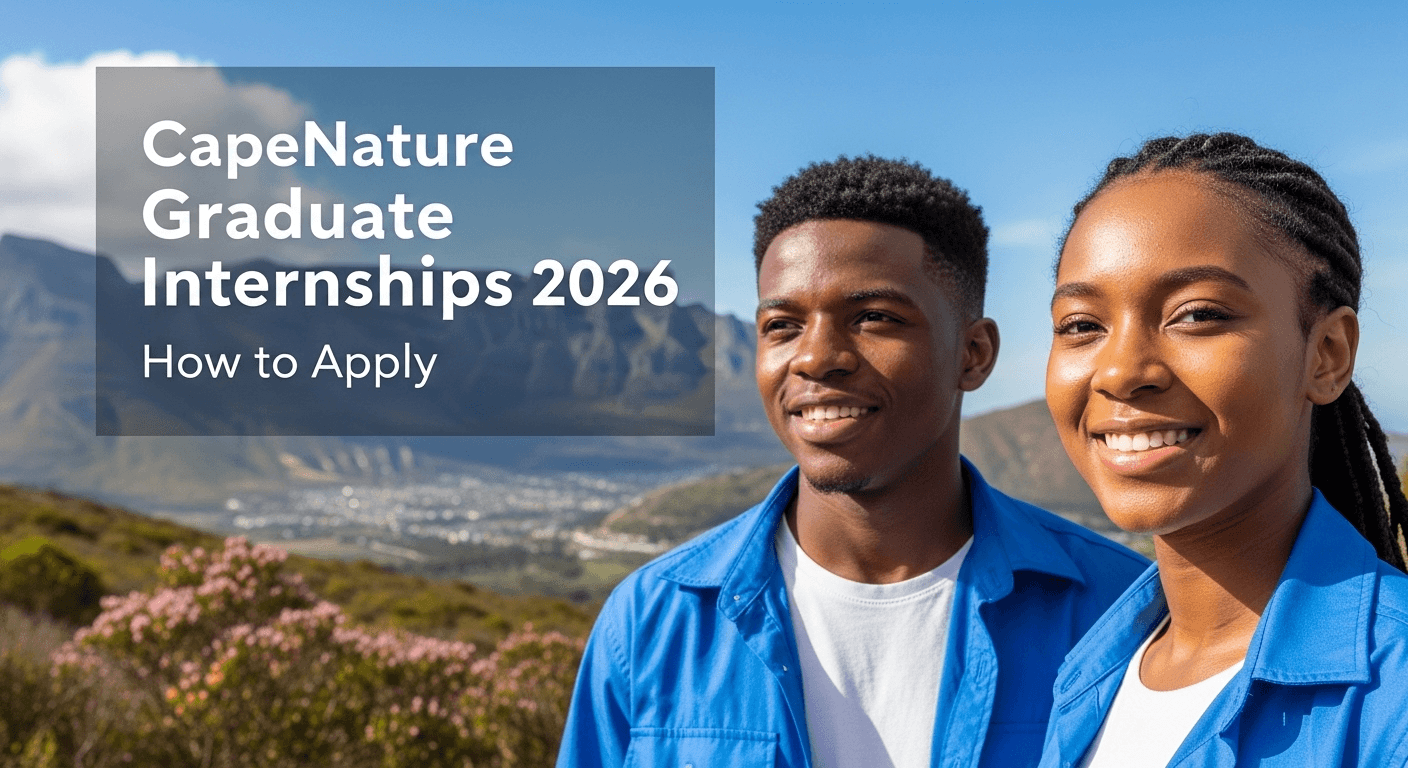

If you’re a South African graduate passionate about protecting the environment, conservation work, or using technology like GIS to make a real difference, the CapeNature Graduate Internships 2026 offer a valuable chance to gain hands-on experience right now. With applications closing on 22 April 2026, this 18-month programme could be the start you need to build your career while helping preserve the Western Cape’s biodiversity.
What the CapeNature Graduate Internships 2026 Offer
This is an 18-month internship programme designed for unemployed graduates. It gives you practical experience in environmental management, conservation, and geospatial technology across the Western Cape. You’ll work in real settings at Stellenbosch’s Jonkershoek Nature Reserve or in Cape Town.
The programme pays a competitive stipend of R120,000 per year. It focuses on fields like freshwater ecology, environmental science, and GIS technology. Your work will directly support biodiversity protection, water resource management, and conservation strategies. CapeNature is the public entity responsible for managing natural resources and wildlife in the Western Cape.
Who Should Apply: Requirements and Eligibility
You must be a South African citizen, have graduated within the last two years, have no criminal record, and hold a valid Code EB08 driver’s licence. If this is your first time applying for something like this, don’t worry – the programme is built for recent graduates who want to gain experience.
There are two main roles available:
- Ecological Technician at Jonkershoek Nature Reserve in Stellenbosch – perfect if you’re interested in water ecosystems, biodiversity, and fieldwork. You need a BSc Honours or MSc in Freshwater Ecology, Aquatic Science, or Environmental Science. Knowledge of the National Water Act is important, and experience with biomonitoring is an advantage.
- GIS Technologist in Cape Town – ideal for those who enjoy mapping, data analysis, and spatial technology. You need a degree at NQF Level 7 or higher in Geomatics, Environmental Management, or Conservation Science.
What You Will Gain from the Programme
Beyond the R120,000 annual stipend, you’ll get structured training and real-world exposure that builds both technical and soft skills. In the Ecological Technician role, you’ll monitor freshwater ecosystems, conduct Water Use Licence audits, assist with licence applications, collect and analyse ecological data, perform fieldwork, and write technical reports. You might visit river sites and use biomonitoring methods like SASS5 to check water quality standards.
In the GIS Technologist role, you’ll support GIS data collection and validation, assist in fire management mapping, convert raw environmental data into GIS systems, and conduct spatial analysis for conservation planning. During wildfire season, your work could help map fire spread in real-time to support quick responses.
From experience, most successful candidates say these internships develop environmental monitoring, GIS mapping, data management, problem-solving, communication, teamwork, and adaptability in field environments. These skills open doors to careers in environmental consulting, conservation science, government environmental roles, and GIS and data analysis.
How to Apply: Step-by-Step Guide
Applying is straightforward if you prepare well. Here’s what to do:
- Confirm you meet all eligibility criteria, including being a recent graduate, having no criminal record, and holding a valid Code EB08 driver’s licence.
- Update your CV to clearly show your qualifications, any relevant projects, and your passion for conservation or GIS.
- Gather your academic qualifications and all supporting documents.
- Choose the role that matches your studies – Ecological Technician or GIS Technologist.
- Submit your application online before the closing date of 22 April 2026.
Click here to apply for CapeNature Graduate Internships 2026. Late applications are not considered. Only shortlisted candidates will be contacted.
Practical Tips to Improve Your Chances
Many applicants struggle with making their application stand out in competitive programmes like this. From experience helping young South Africans, the most successful candidates tailor their CV to the specific role and highlight any related studies, fieldwork, or technical projects.
If you’re worried about not having enough experience, remember that the programme provides training and support. Focus on your willingness to learn and any knowledge of environmental challenges such as water scarcity, climate change, or biodiversity loss. Submit early and double-check that all documents are complete and up to date.
Final Thoughts and Next Steps
The CapeNature Graduate Internships 2026 is a meaningful way to start your career while contributing to important conservation work in South Africa. It combines technical training, real-world projects, and the chance to make a real impact on ecosystems and communities.
If you meet the requirements and feel excited about fieldwork or GIS technology, take the next step today. Apply before 22 April 2026 – you’ve got this, and it could be the opportunity that shapes your future. Good luck!